
War-battered Ukraine risks a demographic collapse
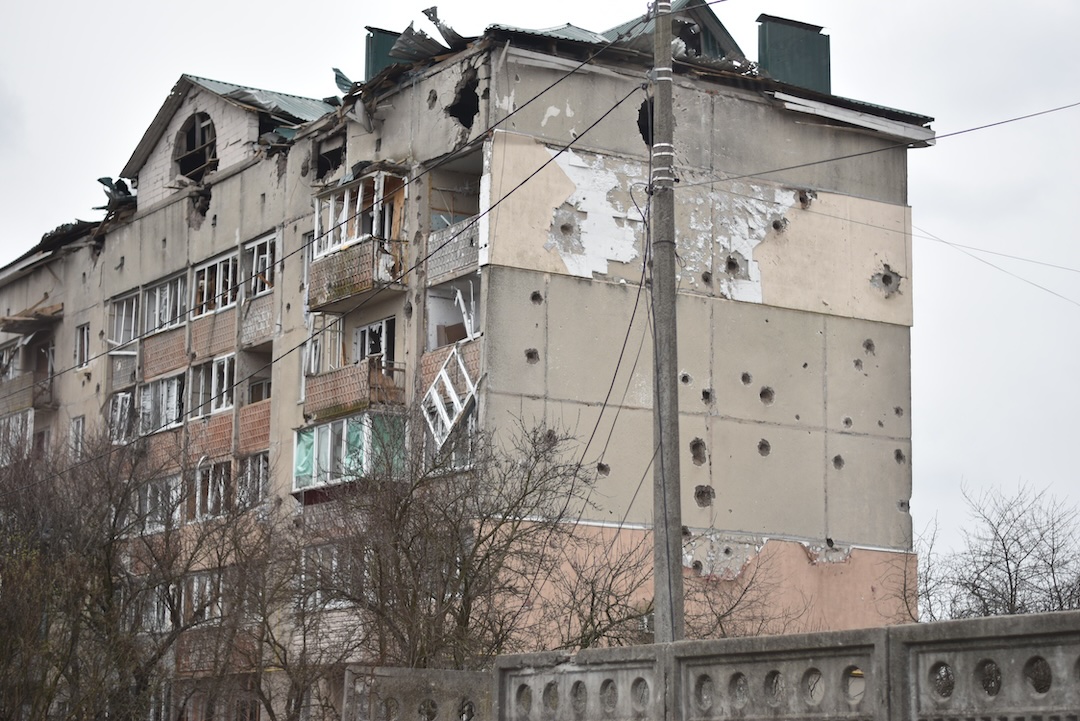
Wars do not merely redraw borders or flatten cities; they hollow out nations from within. Nearly five years after Russia launched its full-scale invasion in February 2022, Ukraine is confronting an existential peril that will outlast any ceasefire: a demographic collapse. Even before Russian tanks rolled across the frontier, Ukraine’s population had been shrinking steadily since 1993. Today, battlefield casualties, chronic stress, mass emigration, and a collapsing birth rate have combined into what Ella Libanova, director of the Ptoukha Institute for Demography and Social Studies in Kyiv, warns is not merely a loss of people, but the loss of the country’s future.
The raw numbers tell a stark story. Before the invasion, roughly 41 million people lived in Ukraine, including territories Russia had occupied since 2014. By mid-2026, according to estimates from Ukraine’s Institute of Demography, the population in government-controlled territory had fallen to around 28.5 million—a contraction of roughly a quarter in less than half a decade. In the first half of 2026, deaths outnumbered births by more than three to one, with just 73,292 newborns registered across the country. Annual births have plunged by nearly 40 percent compared with 2021.
Ukraine’s total fertility rate—the average number of children a woman is expected to have over her lifetime—has dropped from roughly 1.2 before the war to between 0.8 and 0.9. That places Ukraine alongside South Korea at the very bottom of global rankings, far below the 2.1 threshold required to keep a population stable without immigration. Economists and demographers see little prospect of a conventional postwar baby boom. The cohort now entering prime childbearing years was born during the economic turmoil of the late 1990s and early 2000s, making it the smallest generation in Ukraine’s modern history.
Mortality has surged at the same time. Alongside tens of thousands of soldiers killed on the front lines—President Volodymyr Zelensky has acknowledged more than 50,000 military deaths, while independent Western estimates put the toll closer to 100,000 to 150,000—war is killing civilians indirectly. Disrupted health care, relentless air-raid sirens, displacement, and psychological trauma have driven sharp increases in cardiovascular disease and premature deaths. For Moscow, depopulation has increasingly looked less like collateral damage and more like a strategic objective aimed at eroding Ukraine’s long-term economic and military viability.
Yet the single biggest driver of Ukraine’s shrinking numbers is migration. More than five million Ukrainians remain abroad as refugees, predominantly in the European Union, alongside millions more displaced inside the country. Crucially, the exodus is heavily skewed toward the young and educated: roughly two-thirds of refugees are of working age, and more than half are under 35. When Kyiv relaxed exit rules in August 2025 to allow men aged 18 to 22 to travel abroad, nearly 100,000 left within three months, underscoring how fragile the domestic labor pool has become.
The longer the conflict drags on, the slimmer the odds that those abroad will come home. Surveys by Kyiv’s Centre for Economic Strategy suggest that only between 1.3 million and 2.2 million refugees are likely to return once fighting stops. Children are learning Polish, German, and Czech in local schools; mothers have found jobs and housing; and European governments face a looming dilemma over what happens when the EU’s Temporary Protection Directive expires in March 2027. Without durable security guarantees—not merely a fragile frozen conflict—many families see little reason to exchange stability in Central Europe for damaged infrastructure and uncertain prospects at home.
For Ukraine’s postwar reconstruction, the arithmetic is unforgiving. Fewer workers will have to support a rapidly aging population, pay for rebuilding shattered cities, and sustain a large standing army against a hostile neighbor. Kyiv has begun drafting demographic recovery strategies—ranging from expanded childcare and childbirth grants to housing incentives and potential labor immigration—yet money alone cannot manufacture missing generations. Winning the war remains Ukraine’s immediate imperative, but ensuring there are enough Ukrainians left to inherit the peace may prove just as decisive.
References and Sources
The Economist, "War-battered Ukraine risks a demographic collapse: Birth rates are plunging and Russia is celebrating" (November 5–6, 2026).
Ptoukha Institute for Demography and Social Studies (National Academy of Sciences of Ukraine), statements and population estimates by Ella Libanova (October–November 2026).
Ministry of Justice of Ukraine and LIGA.net, civil registration statistics on births and deaths in Ukraine, 2021–2026 (November 2026).
Centre for Economic Strategy (Kyiv), "Wartime demographics: a big threat for Ukraine" and refugee return projections (May 2026).
Think Global Health, "Reversing Ukraine's Population Loss After Four Years of War" by Nataliia Bushkovska (February 24, 2026).
International Institute for Applied Systems Analysis (IIASA) and European Commission Joint Research Centre, European Demographic Data Sheet migration scenarios.
Subscribe
Get Niien News updates in your inbox.