
Tanker Attacks Raise Maritime Security Risks in Key Trade Lanes
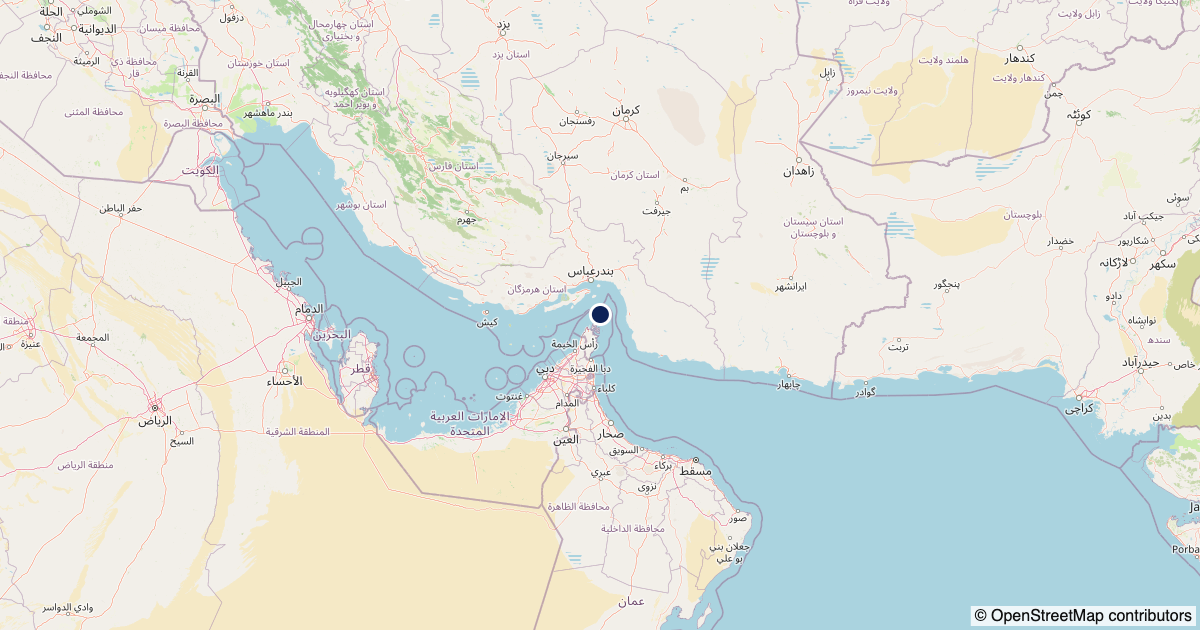
Global oil markets currently present a striking paradox. On paper, crude is abundant: rising production outside the Middle East and tepid global demand have pushed forecasters to project that world supply will soon outstrip consumption, dragging benchmark Brent crude down more than 14 percent over the past month into the high-$80s and low-$90s per barrel. Yet at sea, the plumbing that moves roughly a fifth of the world’s petroleum and liquefied natural gas remains dangerously exposed. Over the past week alone, a fresh cluster of strikes on commercial vessels in and around the Strait of Hormuz—paired with renewed clashes near the Bab el-Mandeb Strait in the Red Sea—has reminded traders and shipowners that ample supply at the wellhead counts for little if tankers cannot safely reach their buyers.
Since November 10, the United Kingdom Maritime Trade Operations (UKMTO) has logged at least seven attacks on commercial ships in or near the Strait of Hormuz. On November 16 and 17, unidentified projectiles struck outbound tankers near Khasab, Oman, sparking engine-room fires and disabling at least one vessel, even as Iranian naval authorities boasted of hitting four tankers in a single 24-hour span. Although crews were safely evacuated in the latest incidents, the pattern is unmistakably cumulative. More than eight months into the regional conflict triggered by American and Israeli strikes on Iran in late February, October recorded the highest monthly tally of maritime security incidents since the war began, and November has brought no respite.
The threat is hardly confined to the Persian Gulf. To the southwest, fierce fighting between Houthi rebels in Yemen and Saudi-backed forces has flared once again around the Bab el-Mandeb Strait, the southern gateway to the Red Sea and the Suez Canal. Throughput at the Suez Canal remains 50 to 60 percent below pre-crisis levels as major container lines continue to divert vessels around Africa’s Cape of Good Hope, adding roughly two weeks to Asia-Europe voyages and locking up global fleet capacity. Meanwhile, in the Gulf of Oman and the Arabian Sea, heightened American naval enforcement against illicit ship-to-ship oil transfers has added another layer of legal and operational friction for tanker operators.
For shipping companies, the immediate consequence is an acute squeeze in the marine insurance market. Underwriters in London and beyond have carved the region into separate high-risk zones—splitting the Persian Gulf, the Strait of Hormuz, and the Gulf of Oman so that vessels incur compounding Additional War Risk Premiums. Rates in the Persian Gulf have climbed to three or four times pre-war levels, while several insurers have declined to quote coverage for Hormuz transits altogether or have imposed strict operational warranties. In a U.S. Senate committee hearing this week, lawmakers and maritime analysts debated eye-watering insurance figures—with testimony citing up to $64 million for high-risk transits and industry estimates placing war-risk cover for a large crude carrier in the tens of millions of dollars. Container lines, too, are passing costs downstream through emergency war-risk surcharges of $1,000 to $3,800 per container.
Faced with soaring premiums and physical peril, shipowners are reshaping global trade routes. While expanded U.S. naval escorts have helped oil flows through Hormuz recover from near-zero in March to roughly 14 million barrels a day—about 82 percent of pre-war volumes—many operators still avoid lingering in Gulf anchorages. Exporters rely more heavily on overland pipelines to terminals on the Red Sea and the Gulf of Oman, alongside offshore transfers outside the narrowest chokepoint. Yet pipelines have finite spare capacity, and rerouting longer hauls around southern Africa absorbs tankers and drives up freight rates even when crude benchmarks fall.
The divergence between calm commodity screens and turbulent sea lanes carries a clear warning. Financial markets have increasingly priced in a comfortable oil surplus and discounted the likelihood of a prolonged blockade. But maritime commerce operates on narrower margins of safety. Every disabled tanker, withdrawn insurance policy, and forced detour acts as a quiet tax on global trade—proving that in an era of persistent chokepoint warfare, energy security depends just as much on the cost of passage as on the volume of barrels pumped.
References and Sources
Hellenic Shipping News and Reuters, "Fresh tanker attack in Hormuz highlights ongoing threats facing Gulf shipping" (November 18, 2026).
United Kingdom Maritime Trade Operations (UKMTO), Weekly Transit Overviews and Incident Warnings 197–211 on vessel strikes near Khasab, Oman, and the Strait of Hormuz (October–November 2026).
United Nations Department of Political and Peacebuilding Affairs, remarks by the Assistant Secretary-General to the Security Council on October–November maritime security incidents (November 14, 2026).
Howden Re and Orion Group / Cambiaso Risso, "Strait of Hormuz: (Re)insurance impact" and "Gulf Maritime Security Update: Insurance Market Response" (2026).
Outlook India and Al Jazeera, coverage of U.S. Senate committee testimony by Hung Cao, Senator Elissa Slotkin, and Windward analyst Michelle Bockmann on Hormuz transit insurance costs (November 19, 2026).
Commodity Board and U.S. Energy Information Administration (EIA), analysis of Brent crude pricing, non-OPEC supply, and Strait of Hormuz transit volumes (November 19, 2026).
Subscribe
Get Niien News updates in your inbox.