
Kazakhstan seeks new coal export routes as Russia curbs Baltic transit
Kazakhstan’s Ministry of Transport has confirmed that Russian Railways (RZD) has been approving only part of the requests to carry Kazakh coal to Russian seaports since August–September, leaving producers unable to export planned volumes. In a written response to Ulysmedia, published on November 23, the ministry said the issue had been referred to the Intergovernmental Commission on Cooperation between Kazakhstan and Russia; a decision by its co-chairs is awaited.
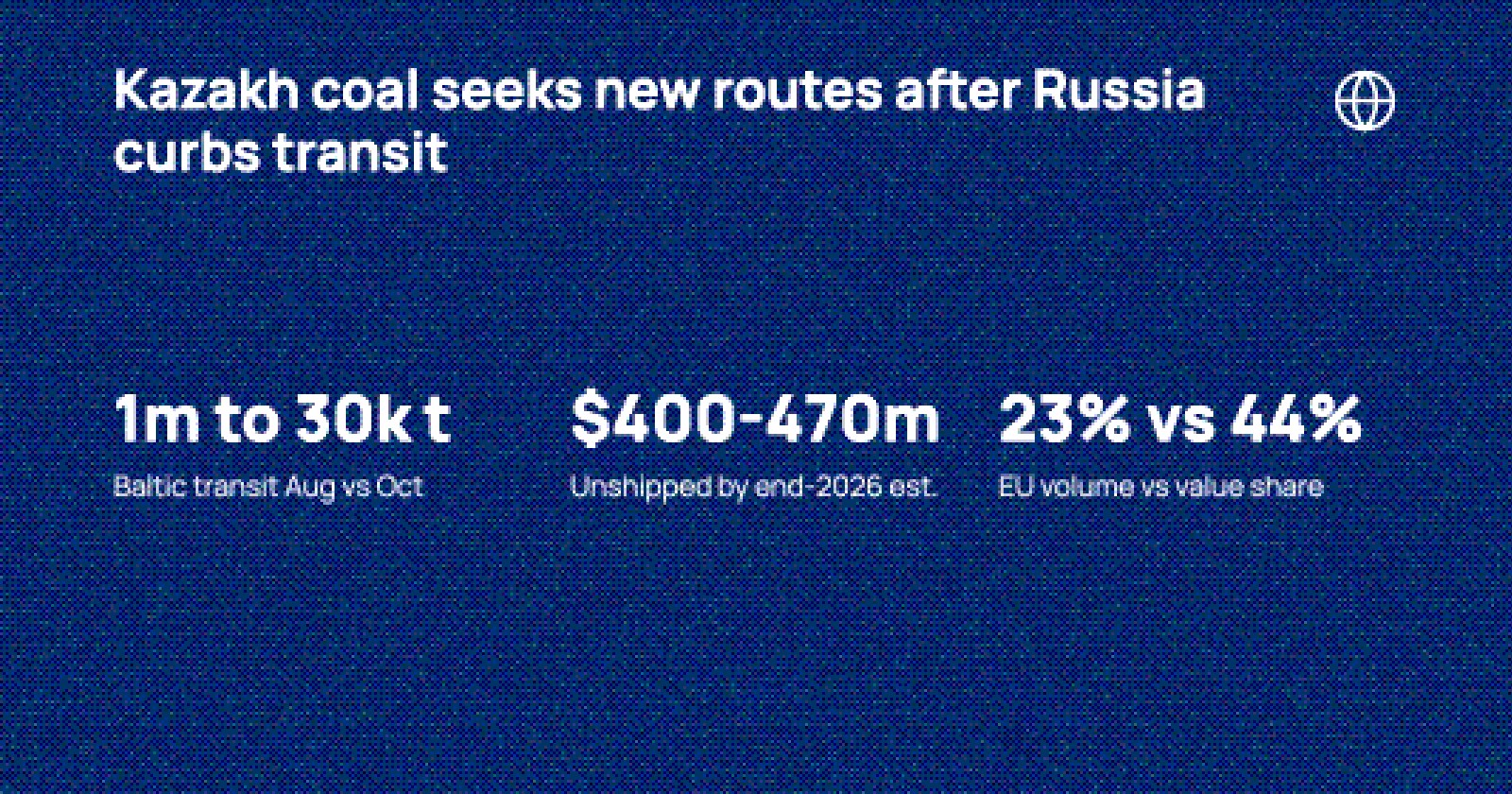
The effect on the Baltic corridor has been sharp. Transit of Kazakh coal through Russia to Baltic ports fell from about 1 million tonnes in August to 500,000 tonnes in September and 30,000 tonnes in October, according to Argus data cited by Vedomosti and analyst Yernar Serik. No applications for Baltic-bound transit were approved for October or November.
The restrictions disrupt a key Eurasian coal corridor supplying European Union buyers and Turkey. The corridor had been carrying rising volumes until recently: Kazakhstan sent 11.7 million tonnes of coal through Russia in 2025, up 27% from a year earlier, and first-half 2026 transit rose another 20%. European Union buyers took 23% of Kazakhstan’s coal exports by volume in January–August 2026 but paid 44% of the $479 million export value, underlining the route’s importance to higher-value sales.
Kazakhstan is now examining alternatives. The Ministry of Transport said options under consideration include shipments through Belarus via Orsha station, the Trans-Caspian International Transport Route to Georgia’s Port of Poti, including via Dina Nurpeisova station, and Latvia’s ports of Riga and Ventspils. Talks with Russian Railways on shipment volumes and plans for 2027 were scheduled for November.
Longer or costlier reroutes could shift cargo volumes among Baltic, Black Sea and Caspian ports. Analyst Yernar Serik estimates that 3.5 million tonnes of Kazakh coal, worth $400 million to $470 million, may not be shipped by the end of 2026, a gap that could also pressure export financing and payment cycles for Kazakh producers.
Subscribe
Get Niien News updates in your inbox.