
Smaller Tankers Rewire the Hormuz Shuttle as Supertanker Risk Hits Breaking Point
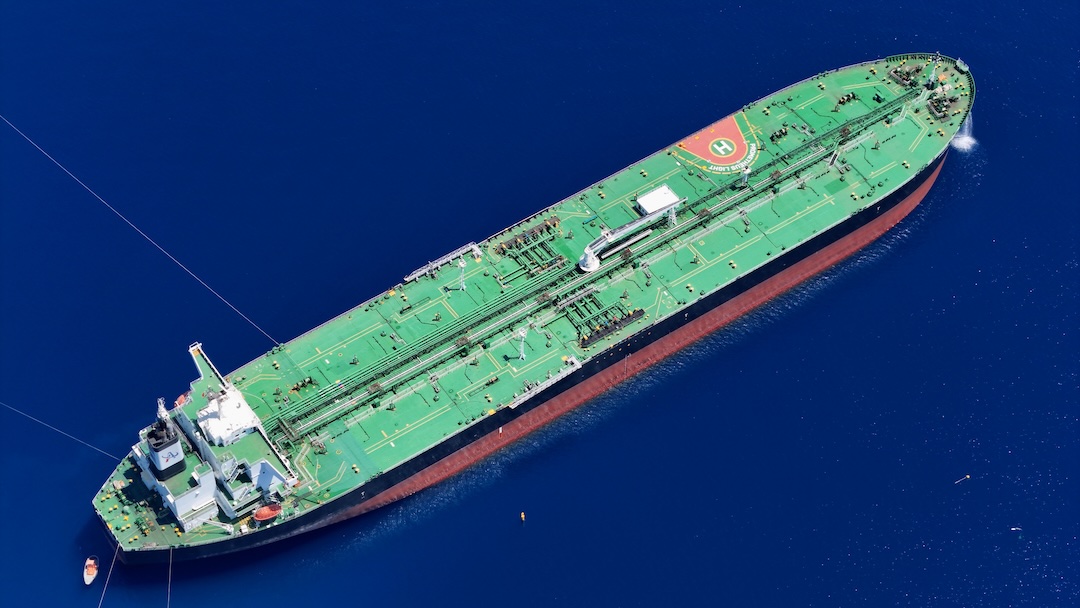
The economics of Persian Gulf crude exports are undergoing a forced structural pivot. Since regional hostilities erupted in late February, sustained maritime attacks have turned the Strait of Hormuz—the world's most critical energy chokepoint—into an operational gauntlet. With verified maritime security incidents mounting steadily through the autumn, traditional Very Large Crude Carriers, or VLCCs, have become prohibitively expensive targets. To keep oil flowing to global buyers, traders and shipbrokers are increasingly abandoning supertankers in favor of smaller, nimbler Suezmax vessels running short-haul shuttles.
At the heart of this shift is the ruthless arithmetic of marine insurance. Before the conflict, war-risk cover for a standard transit through the Persian Gulf cost roughly 0.25% of a ship's hull value. Today, London underwriters are quoting war-risk premiums between 6% and 10% of hull value, priced on a single-voyage basis. For a modern supertanker valued at $200 million or more, that translates into an insurance bill of up to $20 million before a single barrel of oil is loaded. When cargo coverage is factored in, the financial exposure becomes nearly impossible for commercial charterers to absorb.
Suezmax tankers, which typically carry around one million barrels of crude—roughly half the capacity of a VLCC—offer a way around the impasse. Because supertanker freight rates have surged far faster than those of smaller classes, shipbrokers report that Suezmax rates from the Persian Gulf to China are clearing at roughly a third to just under half the published benchmark rate for a VLCC on the same route. Lower vessel valuations also translate directly into smaller absolute war-risk payouts, allowing operators to price voyages that would bankrupt a larger ship.
Rather than sailing all the way to East Asia, many of these Suezmax vessels are operating as regional shuttles. Ship-tracking data shows tankers such as the Lucia A and the Ture repeatedly loading crude at Iraqi terminals and ferrying it out through the strait to safer waters in the Gulf of Oman, or west toward Egypt's Red Sea port of Ain Sukhna. Once outside the immediate blast zone, the crude is transferred onto larger vessels for long-haul delivery to Asian and European refineries. It is a fragmented, labor-intensive workaround that adds friction and transshipment fees to the supply chain, yet it remains far cheaper than risking a supertanker inside the Gulf.
Diplomacy has so far failed to alter those commercial calculations. On November 17, Iranian Foreign Minister Abbas Araghchi met with his Omani counterpart Badr Albusaidi in Muscat to advance negotiations over a temporary, regionally managed navigation corridor and joint mine-clearance operations. While officials in Tehran and Muscat described the talks as constructive, reality at sea told a different story. Within 24 hours of the meeting, an Abu Dhabi National Oil Company vessel came under attack in the strait, leaving one crew member missing and eleven injured, while Iranian military authorities reported three additional tankers disabled after striking naval mines in restricted eastern waters.
For the global shipping industry, the juxtaposition is unmistakable. Even if diplomats in Muscat eventually sign off on a formal transit framework, commercial shipping will not return to normal until the physical threat of sea mines and projectiles is eliminated. In the Strait of Hormuz, hull underwriters and freight markets—not foreign ministers—remain the ultimate arbiters of global energy flows.
Sources
Bloomberg, UK Maritime Trade Operations (UKMTO), International Maritime Organization (IMO), Lloyd's Market Association, gCaptain
Subscribe
Get Niien News updates in your inbox.