
Brussels Backs €3 Billion Jordan Pact to Anchor Eastern Mediterranean Supply Chains
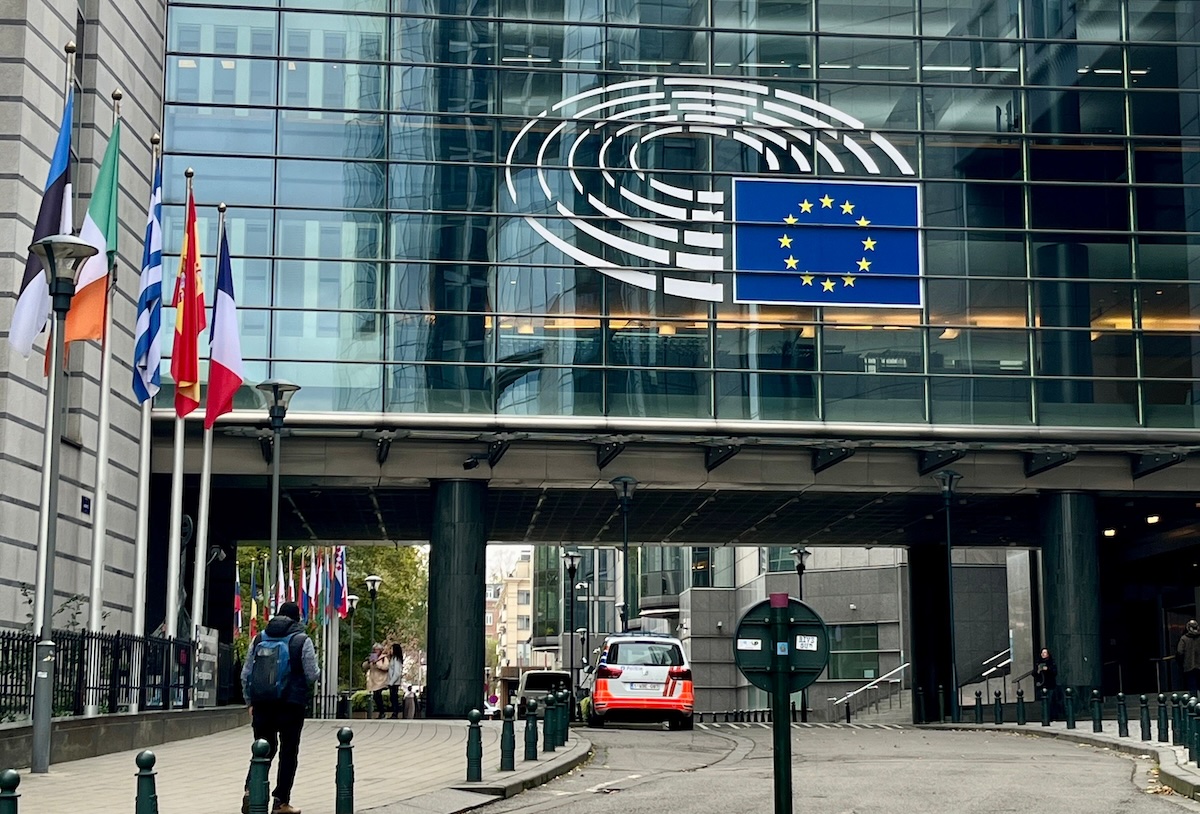
In a move to fortify nearshoring corridors along its southern flank, the European Union formally opened negotiations with Jordan on November 19 for a Sustainable Investment Facilitation Agreement. Announced at the Jordan-EU Investment Conference by European Commission President Ursula von der Leyen and King Abdullah II, the pact builds upon the existing EU-Jordan Association Agreement to cut bureaucratic friction and improve legal predictability for European industrial and green-tech capital.
The agreement—the first SIFA the bloc has pursued in the Middle East and North Africa—is designed to unlock private investment without lowering environmental or labor standards. Unlike traditional bilateral investment treaties that center on investor-state arbitration, Brussels' SIFA model focuses on administrative mechanics: simplifying licensing procedures, increasing regulatory transparency, and establishing clear dialogue channels between foreign companies and local ministries. For European firms looking to diversify supply chains closer to home, the goal is to make operating in Jordan functionally straightforward.
The negotiations sit at the center of a broader €3 billion EU financial and investment package running from 2025 through 2027, which pairs €640 million in direct grants and €1 billion in concessional loans with roughly €1.4 billion in blended private and institutional investments. Alongside the trade talks on Thursday, European Commissioner for the Mediterranean Dubravka Šuica and Jordanian officials signed €673 million in immediate commitments. That tranche includes €500 million in macro-financial assistance loans, €110 million in multi-sector budget support, and €63 million earmarked specifically for economic resilience, trade, and investment.
Capital from the European Investment Bank, the European Bank for Reconstruction and Development, and EU risk-sharing guarantees is already targeting hard infrastructure. Brussels announced an €11.3 million grant to extend the Medusa subsea fiber-optic cable to Jordan to strengthen digital connectivity with Europe, alongside an €18.5 million program to help Jordanian factories adapt to European green-transition standards. Broader infrastructure mobilization worth €1.6 billion is directed at energy, water security, and transport corridors.
The geopolitical timing is deliberate. With maritime chokepoints in the Persian Gulf and Red Sea disrupting traditional East-West shipping lanes since hostilities erupted earlier this year, European policymakers have grown acutely aware of the vulnerability of long-haul supply chains. Jordan, which borders key regional markets while maintaining long-standing trade links with both Europe and North America, offers a stable physical anchor for light manufacturing, pharmaceuticals, and clean-energy assembly.
For Brussels, the Jordan talks also signal a wider shift in trade strategy. Having already put a SIFA into force with Angola in 2024 and concluded another with Ecuador in January 2026, the European Commission is increasingly pairing targeted regulatory treaties with development finance to turn stable regional neighbors into resilient industrial hubs. Whether European manufacturers respond with concrete factory commitments will depend on how quickly Amman and Brussels can turn diplomatic frameworks into faster customs clearance and reliable power and water infrastructure on the ground.
Sources
European Commission Directorate-General for Trade, Royal Hashemite Court, Jordan News Agency (Petra), European External Action Service
Subscribe
Get Niien News updates in your inbox.